The first psychological skill in this miniseries is goal setting, one of the most robust and consistently effective tools for enhancing performance.
In this article I’ll outline what goal setting is, what it’s used for, how it influences performance, and how you can begin applying it immediately to improve focus, motivation, and outcomes.
What is goal setting and what is it used for?
Goal setting is the skill of turning intention into action by giving effort clear direction, purpose and outcome.
It is one of the most consistently supported performance enhancement strategies across sport, business, education, and personal development. When used effectively, goal setting provides structure to effort and creates a clear pathway for improvement rather than relying on motivation alone.
How Does Goal Setting Influence Performance?
Effective goal setting positively enhances several key performance attributes.
Firstly, goals direct attention to important elements of skills and tasks that are being performed. This might involve technical execution on the rugby pitch, preparation and delivery of a report in the workplace, or preparing for exams and assessments.
Second, goal setting increases both effort and persistence. Clear goals sustain motivation over longer periods, particularly during challenging or monotonous phases of training or work, leading to higher quality outcomes.
Third, goal setting promotes the development of new learning and problem solving strategies. When pursuing clear targets, we are more likely to adapt, reflect and refine our approach.
Finally, there is growing evidence that effective goal setting also enhances well-being, meaning its benefits extend beyond performance outcomes alone.
How Can You Develop Effective Goal Setting Practically?
Goals can be defined using 2 key characteristics – goal type and time frame.
Types of Goals:
Outcome goals
These focus on the ultimate outcome of a performance, such as winning a competition or achieving a promotion. While motivating, outcome goals are not always entirely within the individuals control due to external factors like opposition or organisational constraints.
Performance goals
These focus on the standard or quality of a performance, such as delivering a presentation or a routine to a defined standard. They are more controllable than outcome goals.
Process goals
These focus on the execution of specific actions or behaviours, such as technique, preparation routines, or decision making. Process goals often form the foundation for achieving performance and outcome goals.
Time Frames
Short-term goals
These provide immediate steps toward longer-term objectives and help maintain motivation and momentum.
Long-term goals
These represent the ultimate objective, such as gaining promotion over several years or completing a marathon within a defined time frame.
Goal setting is most effective when short and long-term goals are combined, alongside a balance of process, performance and outcome goals. This approach supports sustained motivation and consistent performance over time.
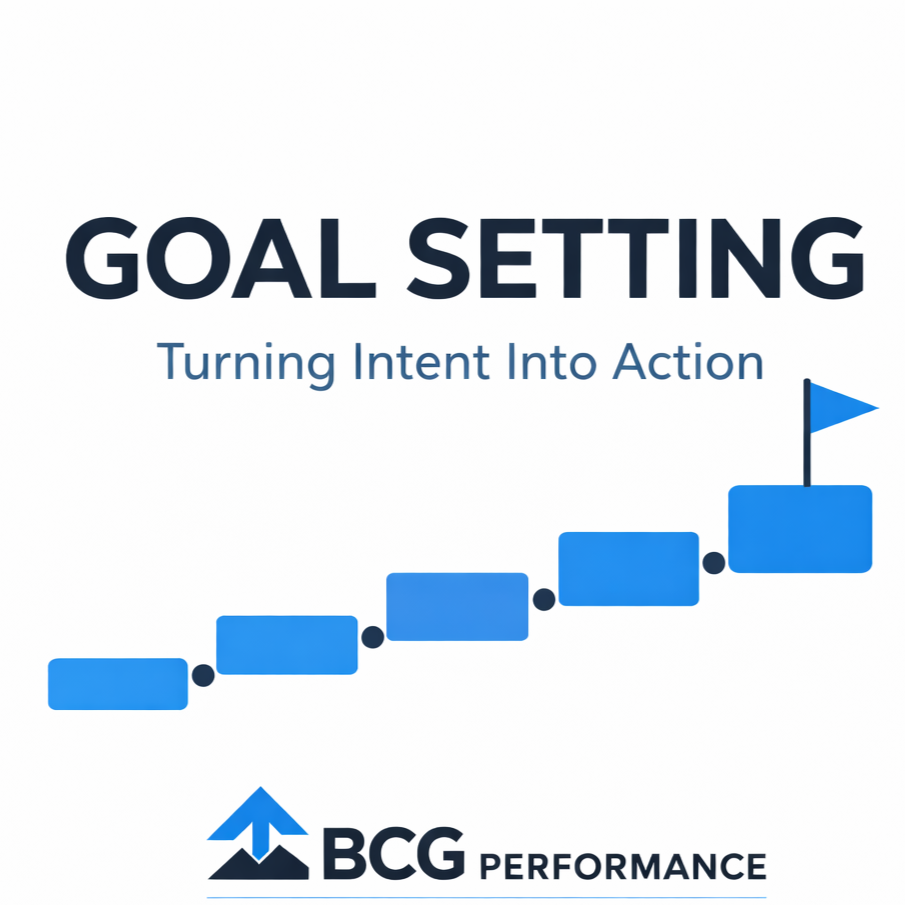
One widely used framework is the goal setting staircase, first proposed by Damon Burton in 1992. In this model, a long term outcome goal sits at the top of the staircase, supported by progressively smaller process and performance goals that act as steps toward the final objective.
How Can You Strengthen Goal Setting Ability?
Simply setting goals is not enough. The effectiveness of goal setting depends on how goals are structured, supported and reviewed.
Key principles of effective goal setting include:
1. Goals should be challenging but attainable
Goals that are too easy fail to engage, while unrealistic goals undermine motivation.
2. Goals should be realistic and achievable
A clear pathway to achievement is essential for sustained commitment.
3. Goals should provide focus
Combining goal types and identifying clear attainment strategies helps maintain direction
4. Goals should be accepted by those involved
Commitment increases when goals are developed collaboratively rather than imposed.
5. Goals should be prioritised
Too many goals can dilute focus. Clear priorities improve adherence and effort.
6. Goal-related feedback is essential
Regular evaluation allows progress to be monitored and adjustments to be made.
7. Negative influences should be managed
Factors such as fatigue, stress, time pressure and social demands should be addressed where possible.
8. Goals should be made public
Sharing goals increases accountability and significantly improves the likelihood of achievement.
A Simple Framework to Get Started
One practical method for structuring goals is the SMART framework:
· Specific
· Measurable
· Achievable
· Realistic
· Timebound
Used alongside a combination of process, performance and outcome goals, this framework provides a clear and practical starting point for effective goal setting.
Example of an effective goal setting plan
Here’s what a simple goal-setting plan might look like in practice:
Outcome goal (long-term):
Improve match-day performance consistency over the season.
Performance goal (short-term):
Achieve an average of 90% completion rate in key skills during competition over the next six weeks.
Process goals (short-term):
· Complete two focused skill-based training sessions per week with clear technical cues.
· Review performance footage after each match to identify one area for improvement.
This example shows how a clear outcome goal is supported by controllable performance and process goals, creating direction while keeping focus on actions within your control.
Putting it all together
If you’d like to put this into practice, I’ve created a free BCG Performance goal-setting worksheet to support the process outlined in this article. It’s designed to help you focus on one meaningful goal, identify the supporting steps beneath it, and apply goal setting principles in a simple, practical way.
You can access the worksheet by signing up below and sending me a message via the contact form with the subject “Goal setting worksheet”. I’ll send you the worksheet directly to your inbox for you to use, revisit and adapt as needed.
What’s next?
Goal setting provides structure and direction for performance, but it is only one psychological skill within a much broader toolkit. In the next article, the focus will shift to imagery. what it is, how it works, and how it can be developed deliberately to support performance.